
Homemakers Interior Design: A portfolio that loads like a brochure
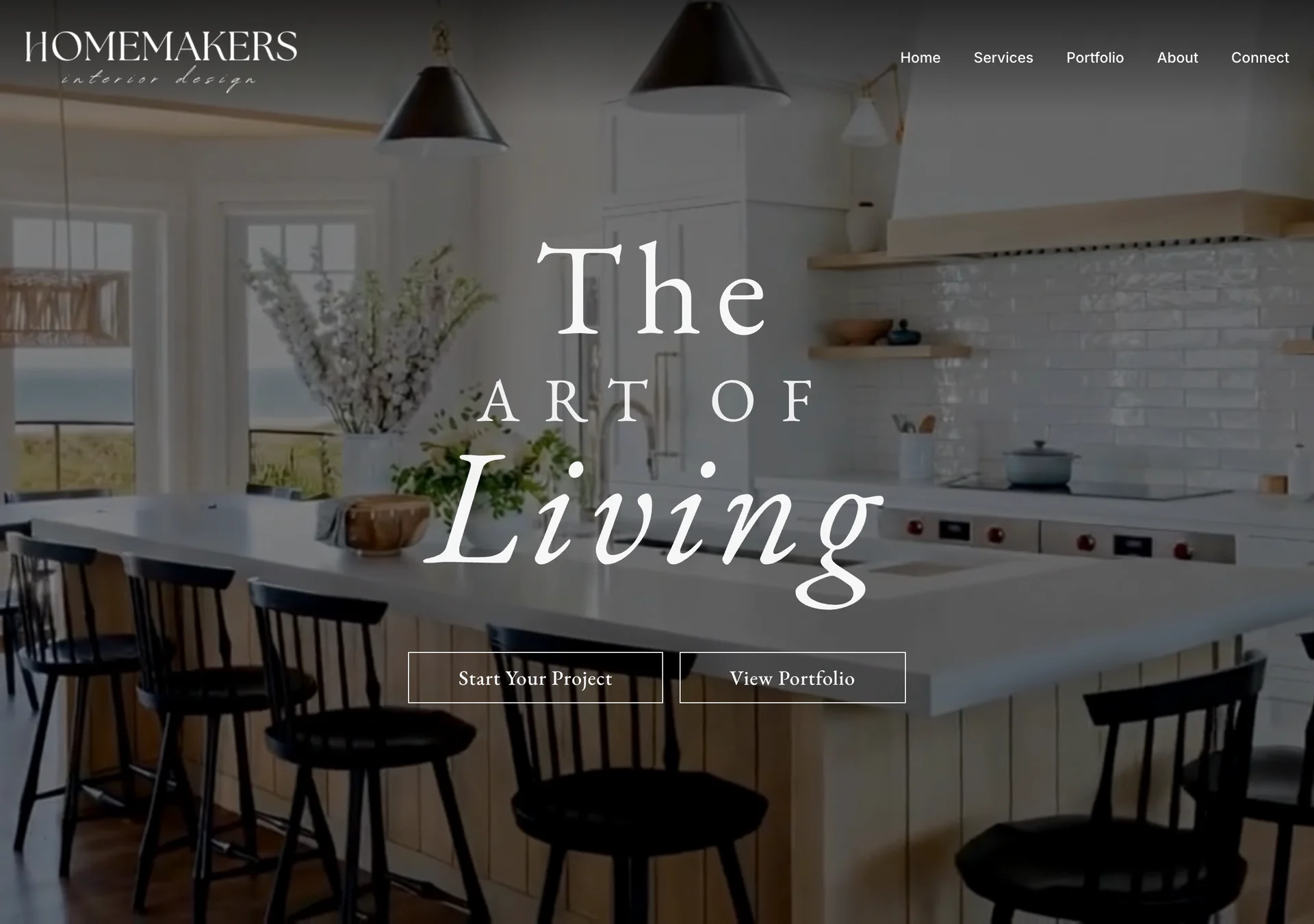
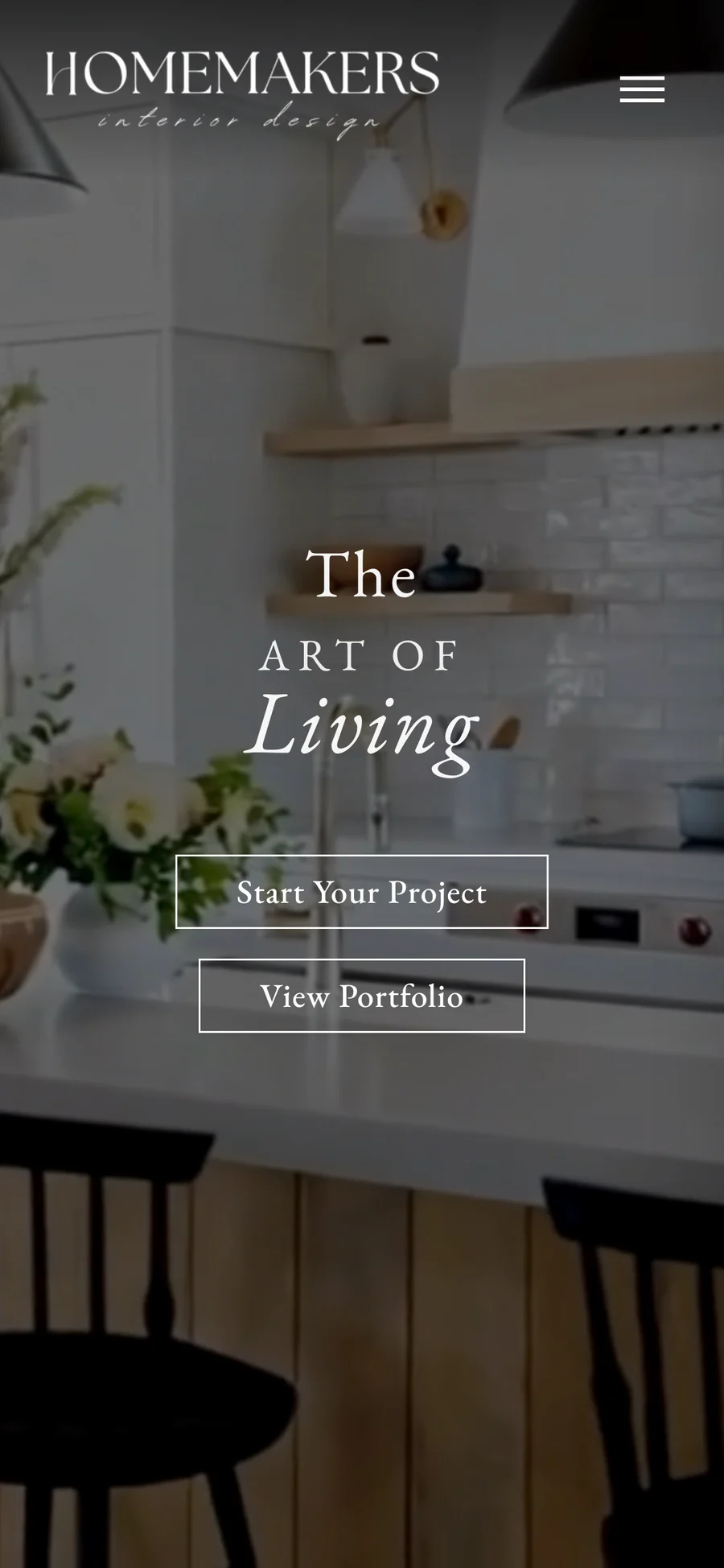
PageSpeed performance 100 on desktop and 91 on mobile on September 24, 2026, with every photograph at full resolution.
- Client
- Homemakers Interior Design
- Industry
- Interior design
- Services
- Strategy, Design, Development
- Live site
- homemakersinteriordesign.com
What did the studio need?
The studio needed a first website that showed the work the way the work deserves. An interior designer sells with photographs of a kitchen at golden hour, cabinetry in the right green, and a room that reads as finished. A template that compresses those pictures to keep the page light, or keeps them heavy and loads slowly, loses the client before the first scroll.
Two small needs followed. The studio's services had to be legible at a glance, so a prospective client knows whether they want the whole house designed or an afternoon of advice. And the path from admiring a room to asking for a conversation had to be short.
What did we build?
A custom portfolio and inquiry site where the photography is the design.
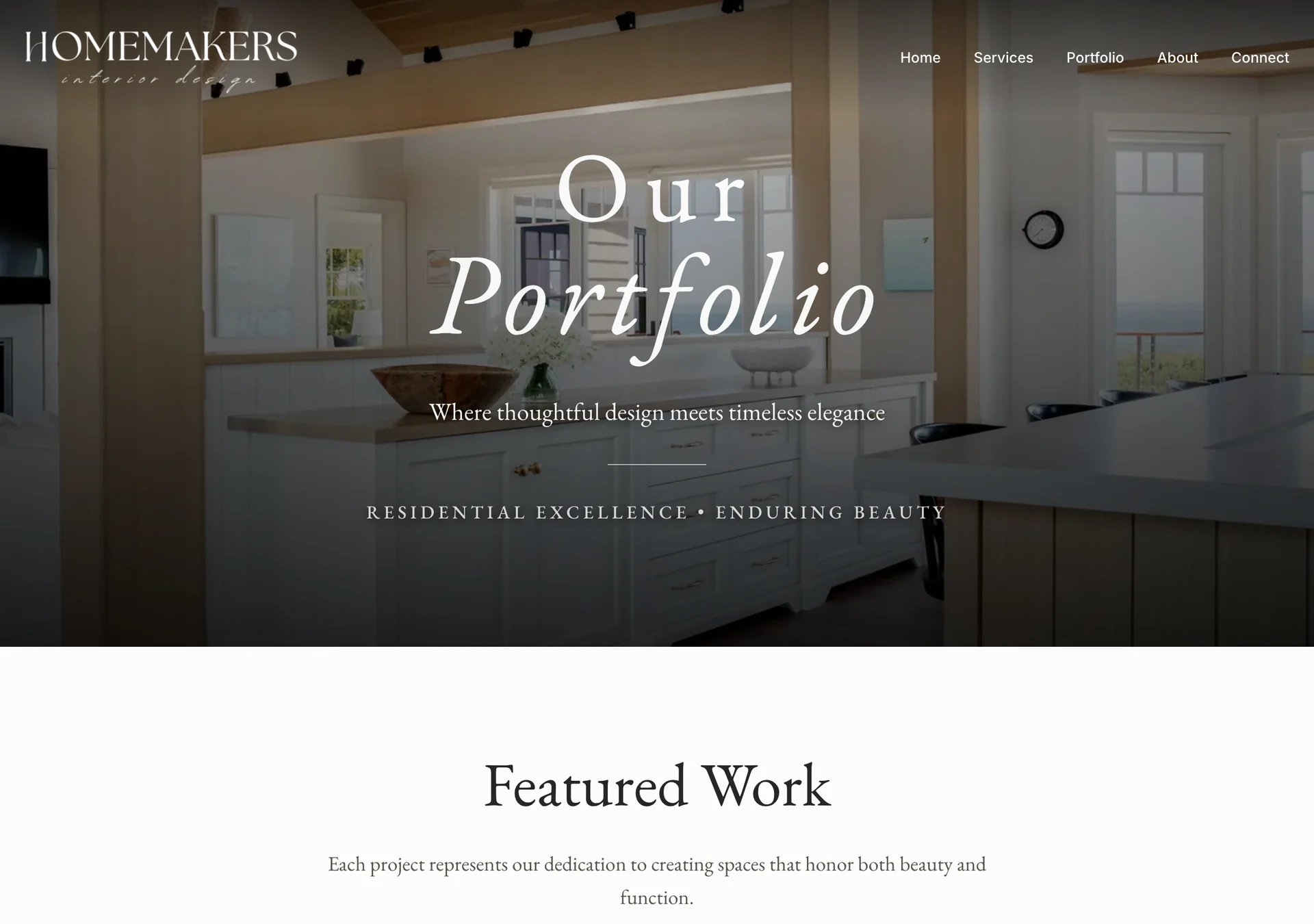
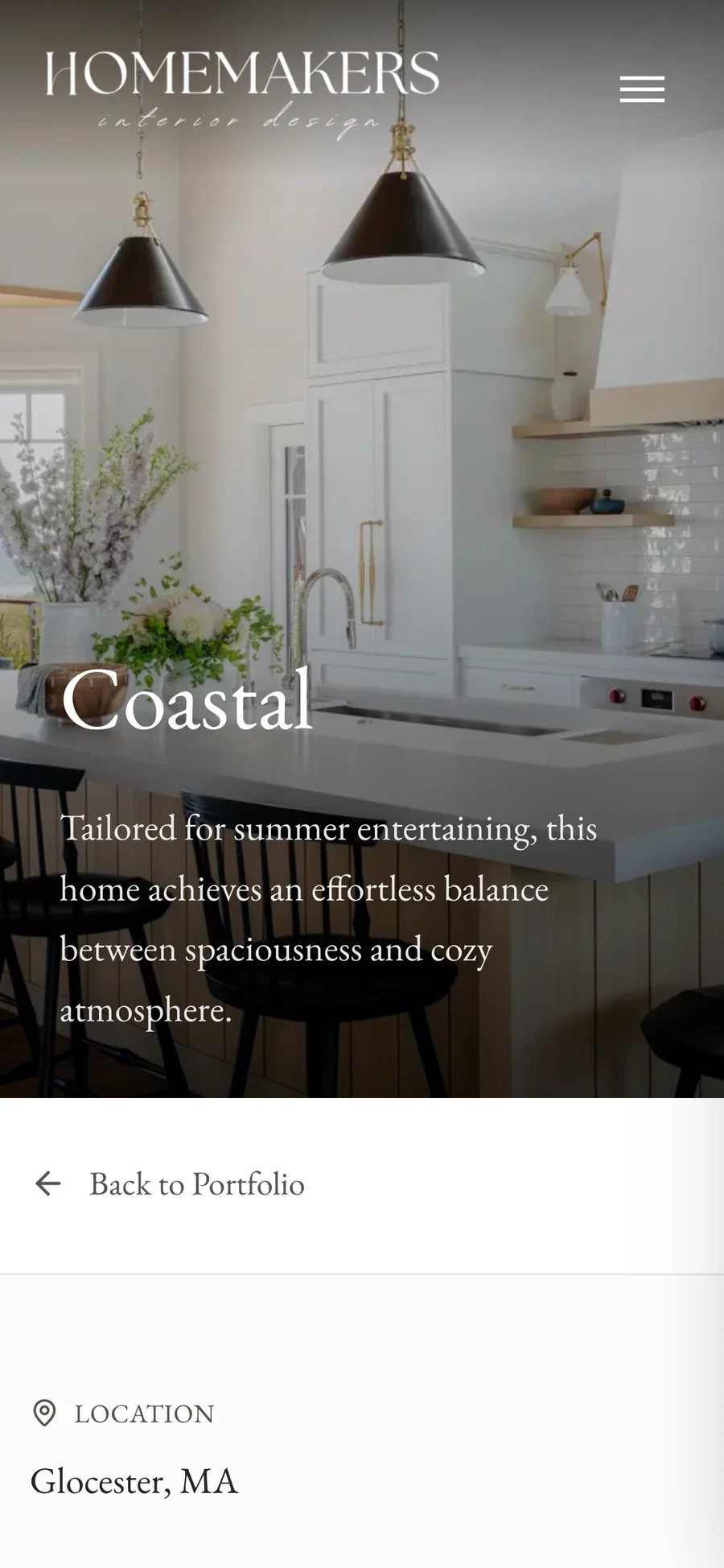
Six projects, each with its own page. Coastal, Collected, Classic, English, Traditional, and Home, each named for the house and placed by its town, from Glocester to Hingham. The project page shows the hero photograph, names the location, and describes the rooms. A prospective client in Wellesley can find the Wellesley house.
- project pages
- 6
- services, named plainly
- 3
- PageSpeed on desktop
- 100
- PageSpeed on mobile
- 91
The photography, delivered properly. Every image is served through an image pipeline that produces the right size for the screen asking for it, with the full-resolution original kept for the screens that can show it. That is how a page built almost entirely of large photographs measures 100 on Google's desktop test and 91 on mobile, the median of six PageSpeed runs on September 24, 2026.
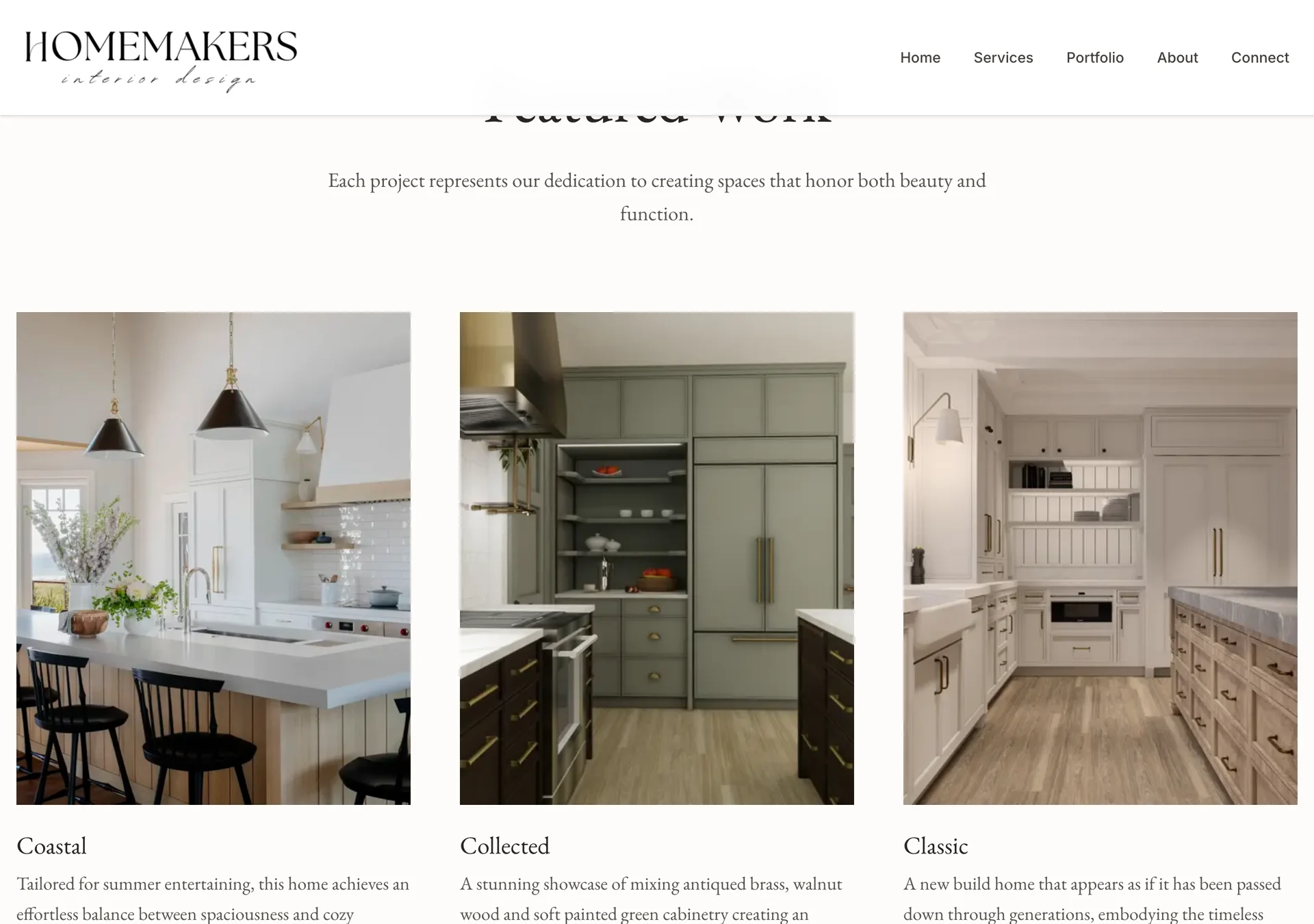
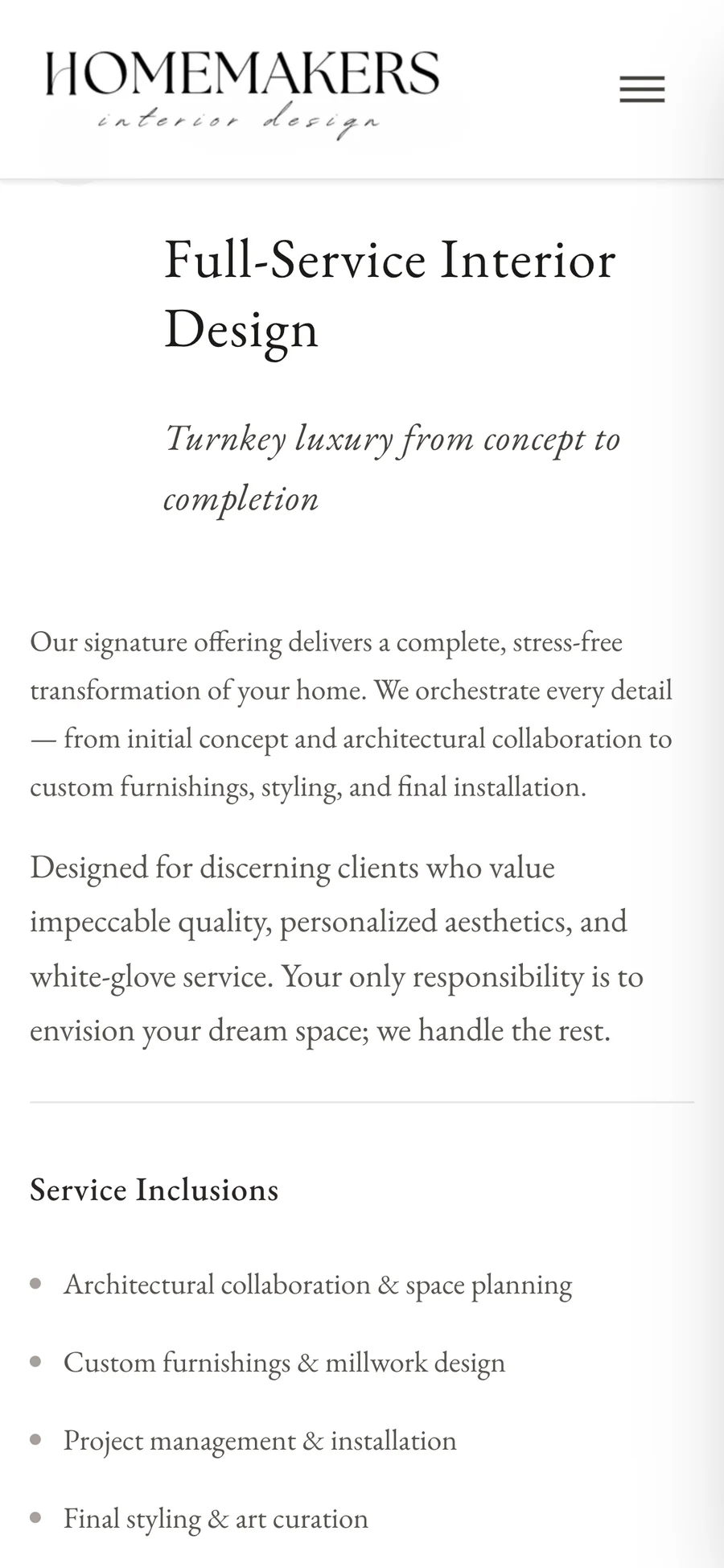
Three services, named plainly. Interior design from concept to completion, design for new construction and renovations, and design consulting, each with a line that says who it is for and what it includes, and no prices. A visitor decides which door is theirs before they write.
A short path to a conversation. The homepage and the services page end at the same two choices, Start Your Project and View Portfolio, and the inquiry form on the contact page is protected against automated submissions without asking a real person to solve a puzzle.
Search. Each page has its own title and description, and structured data describes the studio and its three services, so a search engine or an AI assistant reading the site knows what the studio does and where.
What did we leave out?
There is no blog, no newsletter, and no pop-up. An interior design site earns its visits from the portfolio and from word of mouth, and everything that is not a photograph or a way to get in touch was left off so nothing competes with the rooms.
We also did not put prices on the services. A studio that quotes each project after a conversation should say so and stop, and the site does.
What can you check today?
Open homemakersinteriordesign.com, go to the portfolio, and open a project. Zoom in on a photograph on a laptop; it holds. Then run the address through PageSpeed Insights and read the desktop and mobile scores for yourself.
One thing to know when you look at the footer. It credits Blastoff, the name our founder's company traded under before it became Rivet Bay. The work is ours, and the credit will be updated.
What does the client say?
The quality of our work lives in the details, and I needed our first website to carry that through. Rivet Bay built a site as beautiful as the spaces we design, and clients feel it before we ever speak.
That last sentence is the result we publish. The measurable part is the speed, dated and repeatable; the rest is the client's, and it is in their words.
If your business sells with pictures, our services cover sites built to carry them, and a scoping call is where a project like this one starts.