
Raincoat Claims Consulting: A compliance site that answers first
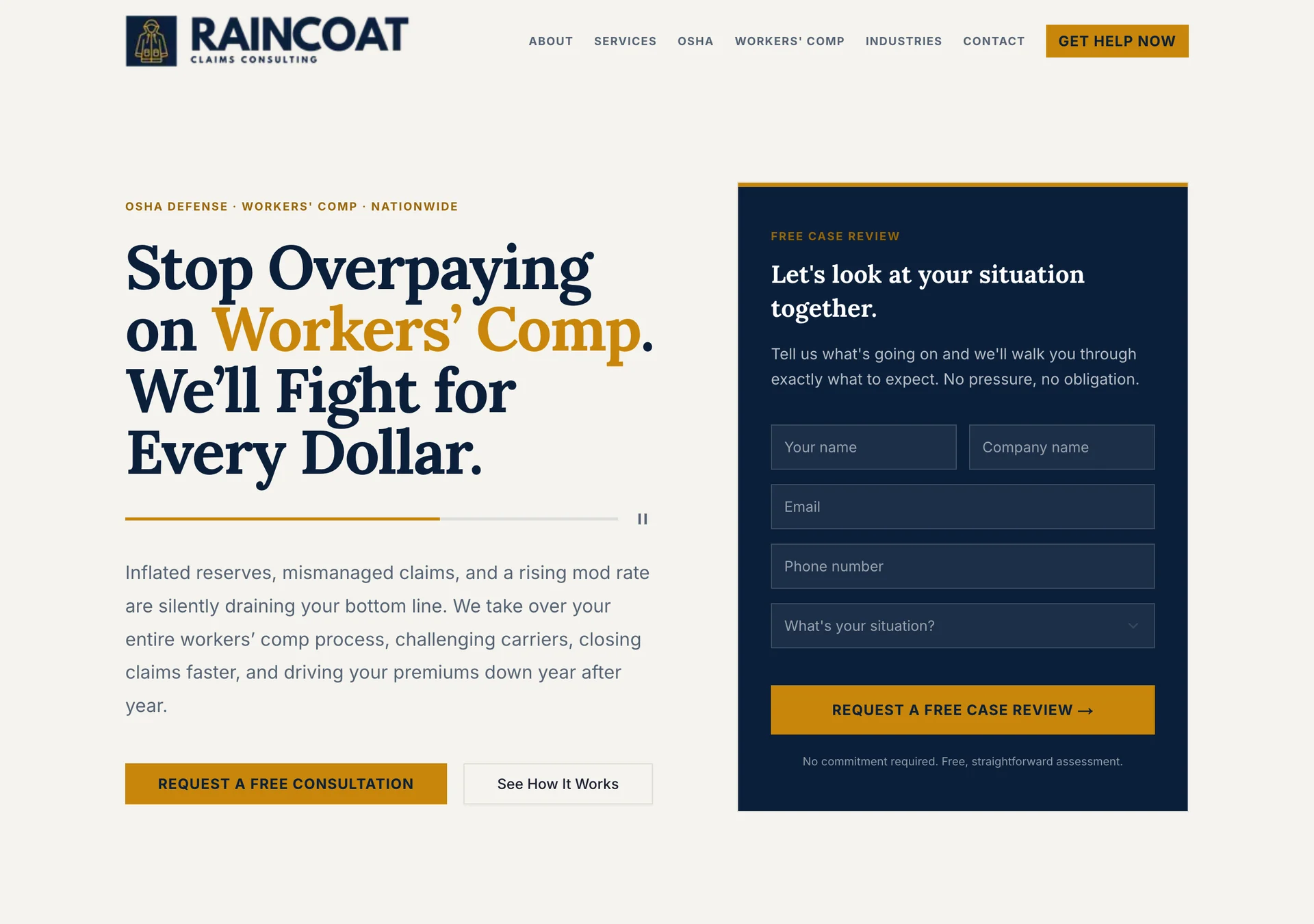
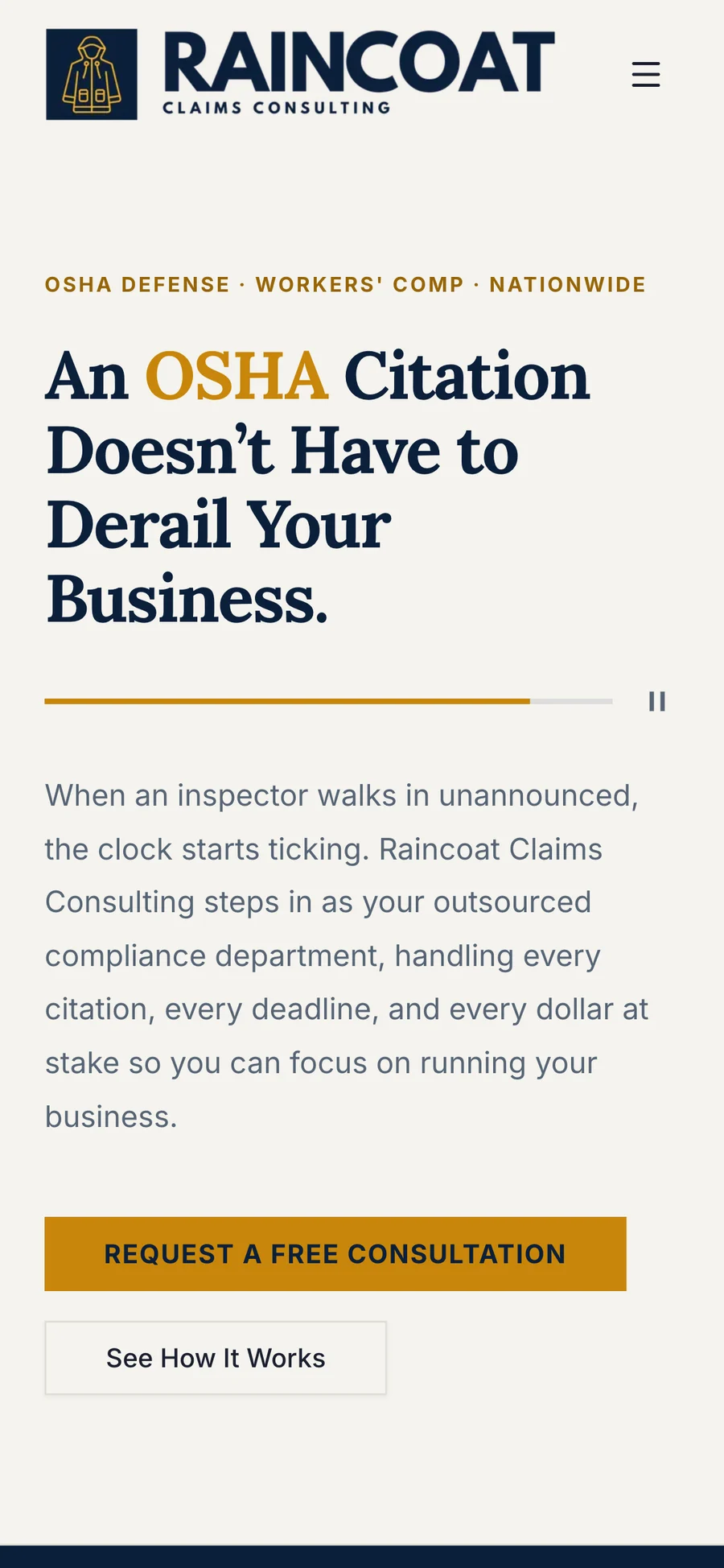
Inquiries from across the country, in the client's words, and a page for every state that answers the compliance question before the call.
- Client
- Raincoat Claims Consulting
- Industry
- Safety and compliance consulting
- Services
- Strategy, Brand refresh, Design, Development, SEO
- Live site
- raincoatcc.com
What did Raincoat need?
Raincoat needed a site that could stand in for the first conversation. A business that has just received an OSHA citation has a deadline, a penalty figure, and a state agency it may never have dealt with, and it searches for help in its own state. Raincoat serves all fifty, with people who used to work inside OSHA, but its online presence did not say so in a way a visitor in Texas or Ohio could find.
Two smaller problems came with the big one. The firm had no professional visual identity to put on a proposal, a dashboard, or a shirt. Automated form spam overwhelmed its inquiry channels, making real inquiries hard to find.
What did we build?
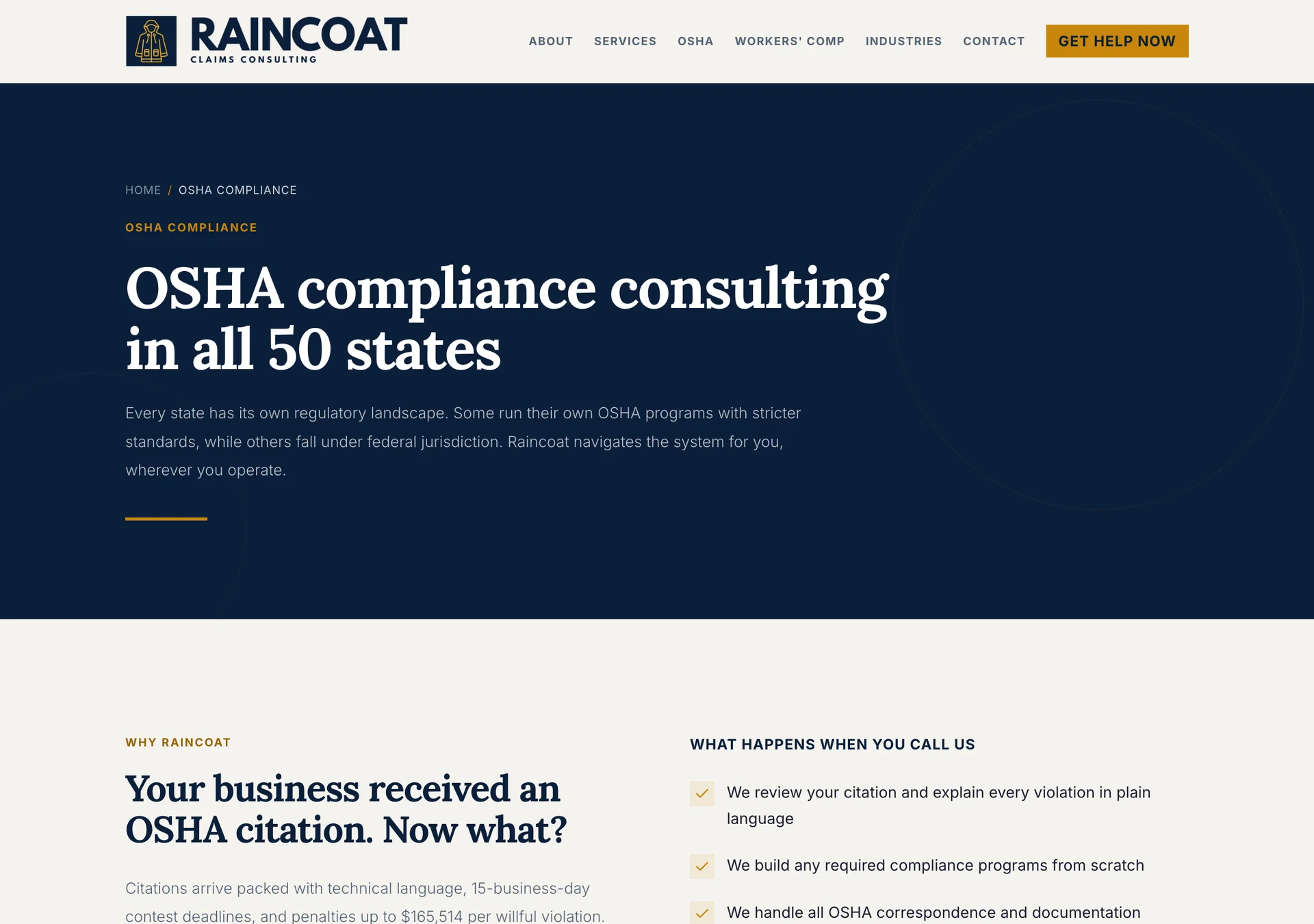
Two compliance hubs, a page for every state under each, and an inquiry path that lands with the safety team, under a refreshed brand.
- compliance hubs
- 2
- states under each
- 50
- state pages
- 100
- Texas area offices
- 9
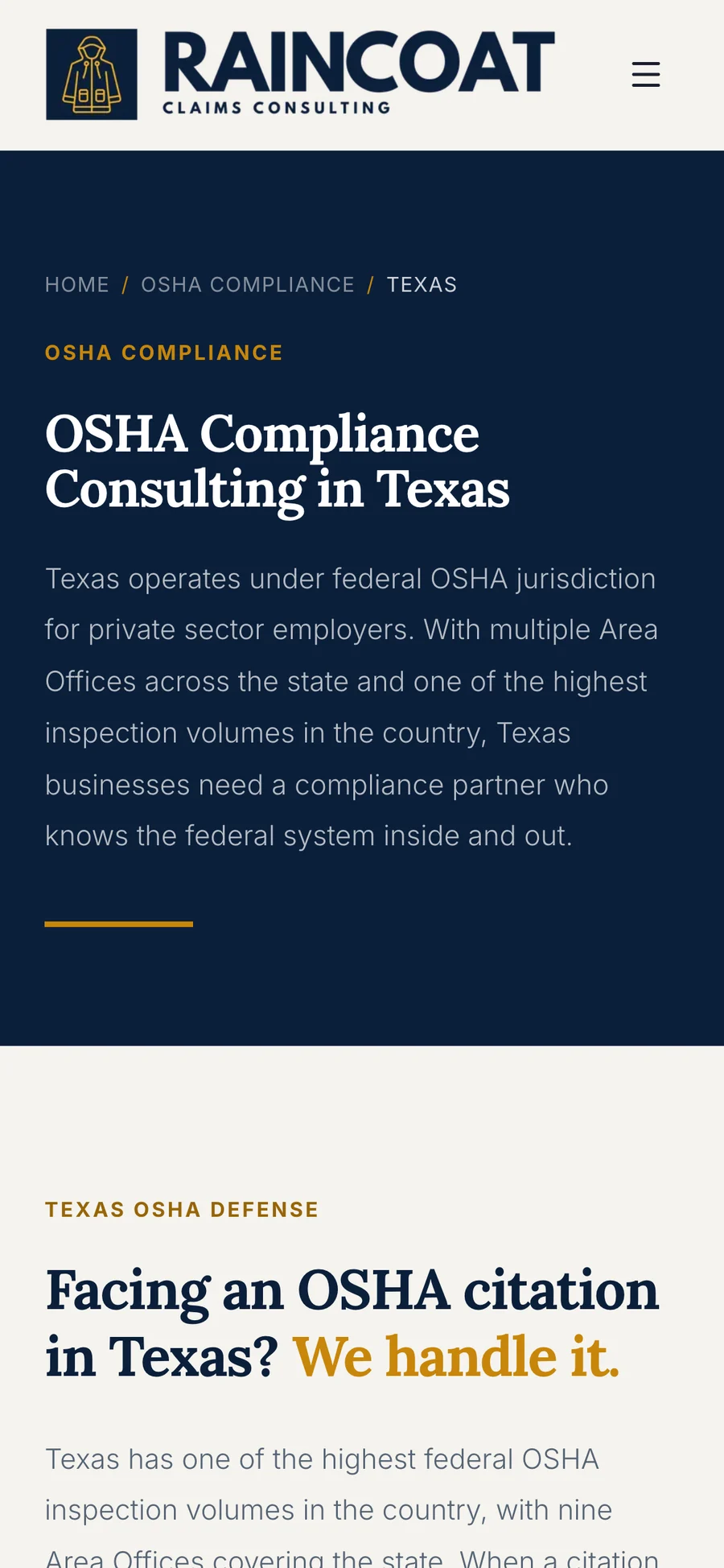
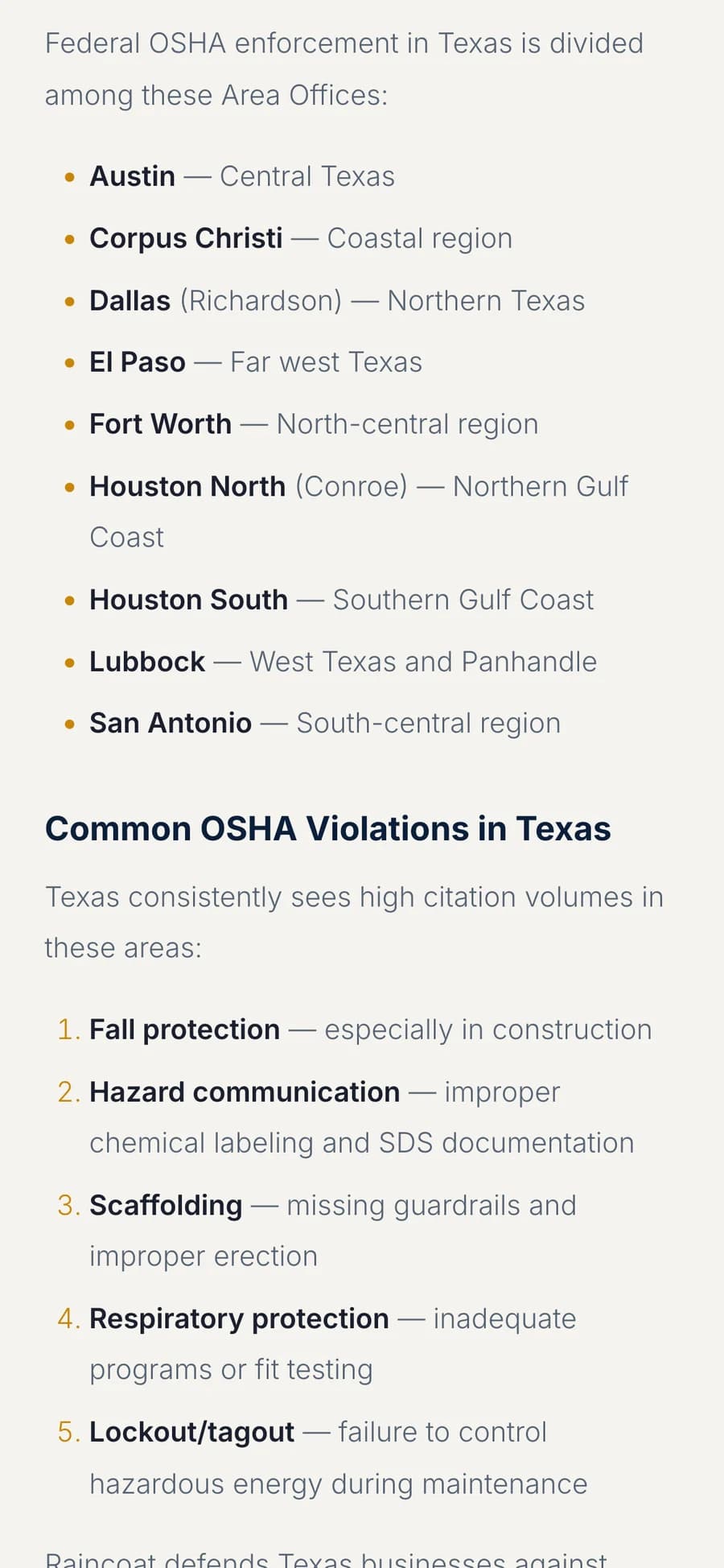
A page for every state. This is the part of the site that does the work. The Texas OSHA page states the jurisdiction (federal OSHA for the private sector), the OSHA region and its nine area offices, the deadline to respond to a citation, the current penalty figures per violation, the free state consultation program, the violations that come up most, and a set of questions employers in that state ask. It links to the workers' compensation page for the same state and to the neighboring states in the same region.
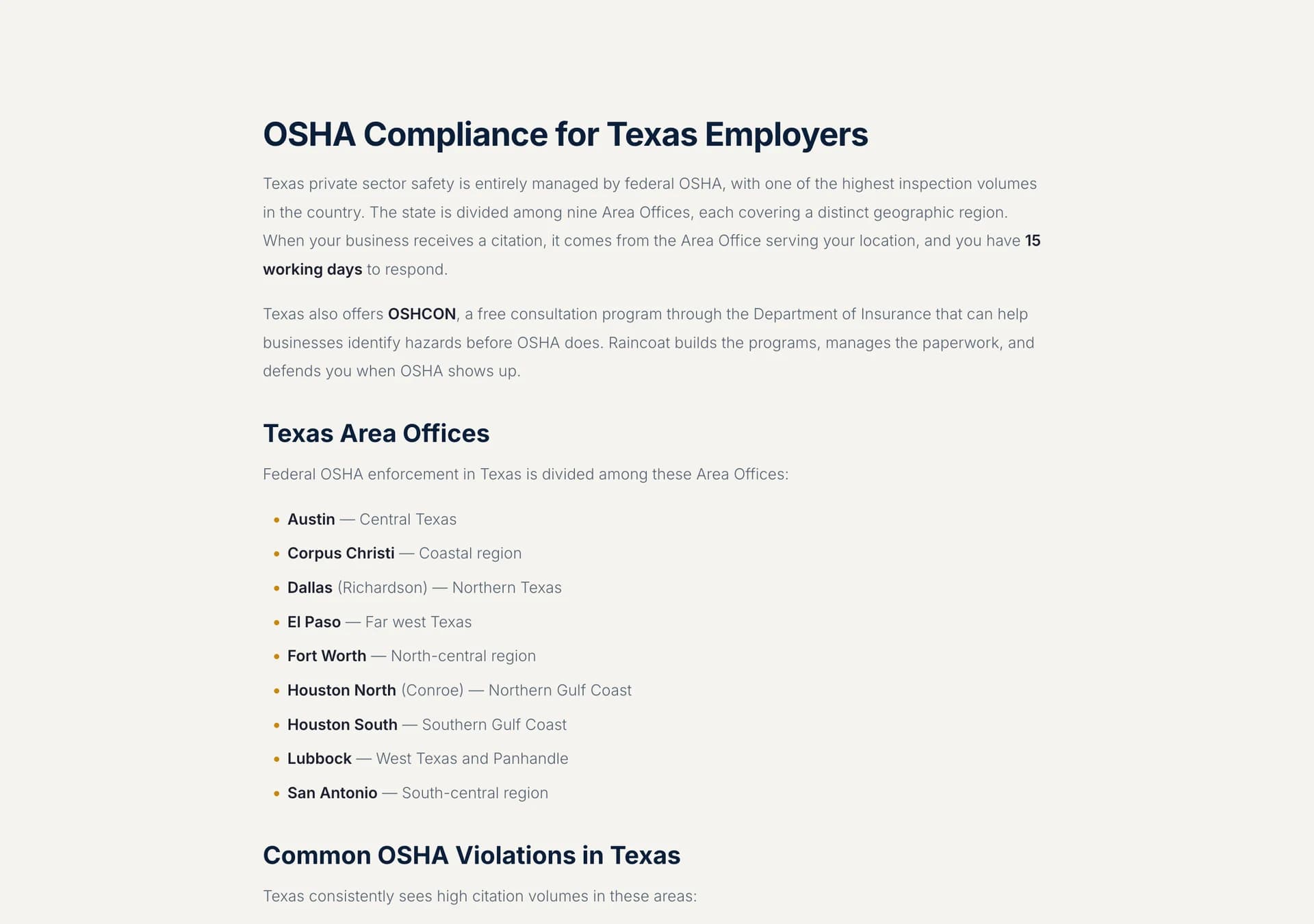
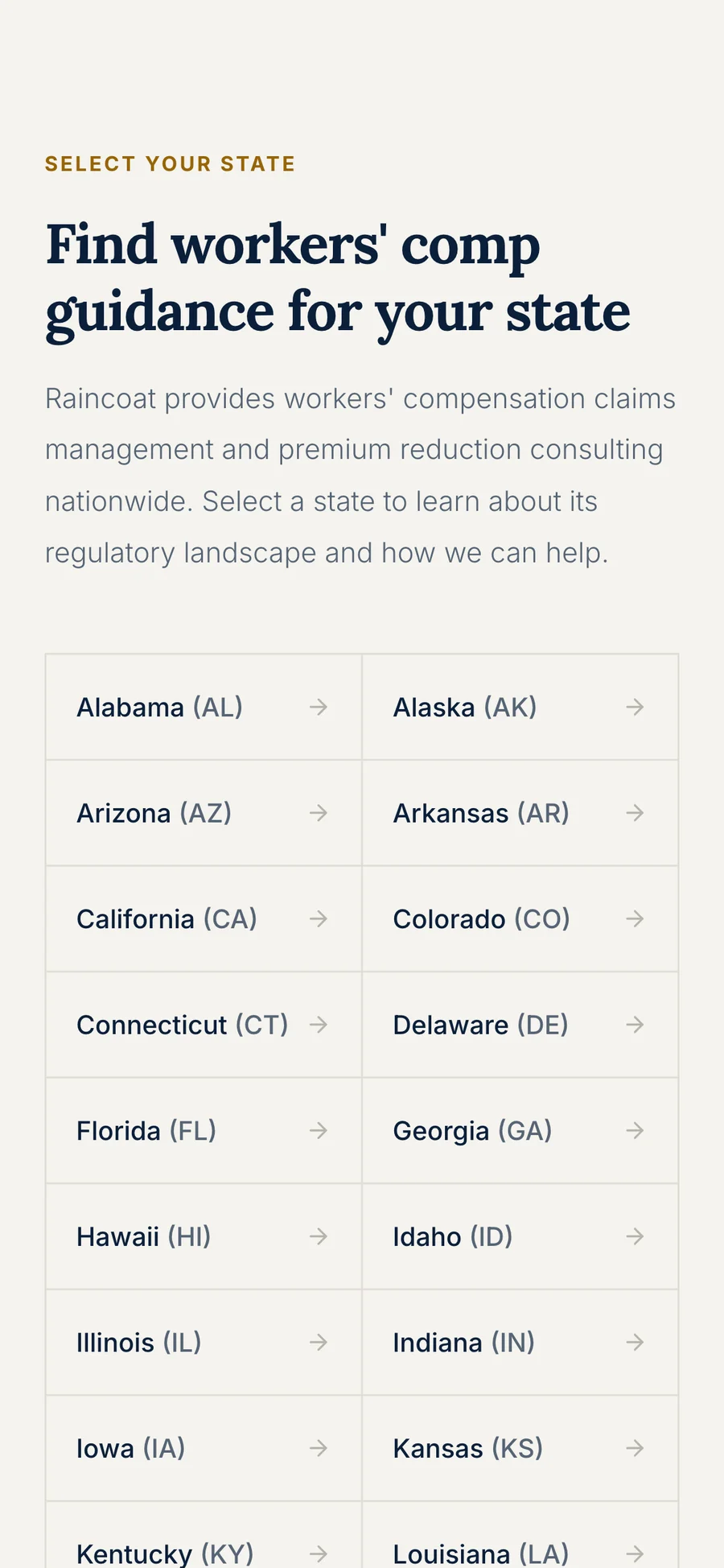
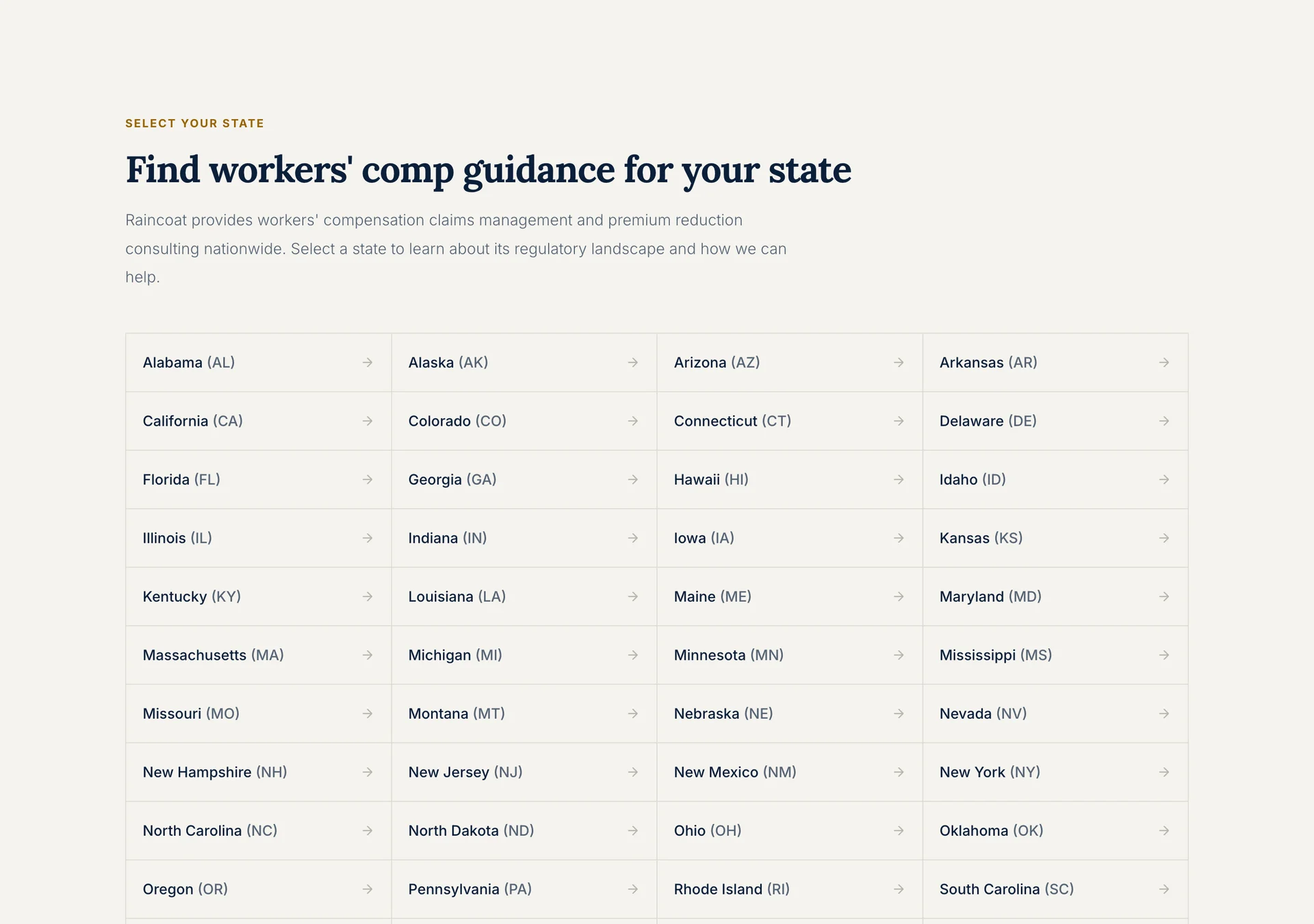
One hundred of these pages exist, generated from a structured dataset so that a change to a penalty figure or an office list is made once and appears everywhere it should. The pages are not thin copies of each other with the state name swapped, because the facts on them differ by state, and that difference is what makes each one worth a search engine's attention.
The inquiry path. A free case review is the offer, and every page says so. The form is protected by Cloudflare Turnstile, which stops the automated submissions without asking a real visitor to solve a puzzle, and each inquiry is delivered by email to the safety team as it arrives. The phone number and the email address are on every page too, because a business with a fifteen-day deadline may not want to fill in a form.
The brand. A refreshed logo and a bold industrial visual language, drawn for legibility on screens, on printed proposals, and on the apparel a safety consultant wears on a job site. The site is the first place it appears; it is built to survive the second and third.
Search. Every page has its own title and description, and structured data describes the business and its reviews, so a search engine or an AI assistant reading a state page knows whose page it is.
What did we leave out?
The site has no blog and no news section. The depth lives in the state pages, because those are the pages a visitor with a citation needs, and a compliance firm's time is better spent keeping fifty sets of facts current than writing posts nobody searched for. If the firm ever wants an articles section, the site can carry one; it was not the first thing to build.
We did not hide the phone number behind a form. A site built to convert can be tempted to funnel every visitor through the same field, but Raincoat's clients are often under a deadline, and the fastest path to a person is a number at the top of the page.
What can you check today?
Open raincoatcc.com and pick any state under either hub. Read the page as if you had a citation on your desk: the region, the offices, the deadline, the penalties, the questions. Then open the form, and notice that nothing asks you to prove you are human. That is the site doing what it was built to do.
The footer credit, "Crafted by Rivet Bay Web Design", is a followed link that shows our name on the work. Our guide to choosing a web design agency explains what to look for in any agency's work, this one included.
What does the client say?
They took the time to understand our business, and the site now answers the hard questions before a client ever calls. We get quality inquiries from all over the country.
We publish that last sentence as the result. Not a traffic percentage, not a lead count, because those are the client's numbers and they move every month. What holds is that a firm serving fifty states now has a page for each of them, and, in the client's words, the inquiries come from all over the country.
If your business answers the same hard questions on every call, our services cover sites that answer them first, and a scoping call starts a project like this.